

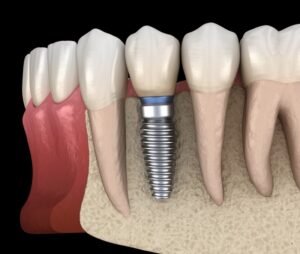
Dental implants are designed to be secure, stable, and long-lasting. Because they are anchored directly into the jawbone, they typically feel very similar to natural teeth. If your dental implant suddenly feels loose or unstable, it can understandably cause concern. Fortunately, a loose implant does not always mean the implant itself has failed. Knowing what to do can help protect your oral health and improve the chances of successful treatment.
Do Not Ignore the Problem
A dental implant should never feel loose. Even slight movement may indicate that something is wrong with the implant, the attached crown, or the surrounding tissues.
Ignoring the issue could allow the problem to worsen over time and potentially lead to complications such as infection, bone loss, or implant failure.
Contact your dentist as soon as possible if you notice:
- Movement or wobbling.
- Pain or discomfort.
- Swelling around the implant.
- Difficulty chewing.
- Gum irritation.
- A clicking sensation.
Prompt evaluation is important for protecting the implant and surrounding structures.
Avoid Chewing on the Implant
Until you see your dentist, try to avoid chewing on the affected side of your mouth. Excess pressure on a loose implant may increase damage or worsen instability.
Stick to softer foods and avoid hard, crunchy, or sticky items that could place additional stress on the implant. You should also avoid touching or wiggling the implant with your fingers or tongue.
The Crown May Be Loose, Not the Implant
In some cases, the implant itself remains secure while the dental crown attached to it becomes loose. This can happen if the connecting screw loosens or if cement holding the crown weakens over time.
A loose crown is often easier to repair than a failed implant. Your dentist may simply tighten or replace the crown components after examining the area.
However, only a professional evaluation can determine the exact cause.
Possible Causes of a Loose Implant
Several issues may contribute to implant looseness, including:
- Bone loss around the implant.
- Gum infection or peri-implantitis.
- Teeth grinding or excessive bite pressure.
- Trauma or injury.
- Failure of the implant to fully integrate with the bone.
- Loosened implant components.
Early treatment can sometimes prevent more serious complications.
Treatment Options
The appropriate treatment depends on the cause of the looseness. Your dentist may recommend:
- Tightening the implant crown.
- Deep cleaning around the implant.
- Treating gum infection.
- Bite adjustments.
- Replacing damaged components.
- Removing and replacing the implant in severe cases.
The sooner the issue is addressed, the more treatment options may be available.
A loose dental implant should always be evaluated promptly by a dental professional. While the problem may sometimes involve only the crown or attachment components, it could also signal infection or bone loss around the implant. By seeking treatment early and avoiding pressure on the implant, you can help protect your oral health and improve the likelihood of preserving your implant for the future.
About the Author
Dr. Albert Kim began his education as an undergraduate at UCLA before going on to earn his Doctor of Dental Surgery degree from the prestigious NYU College of Dentistry. In 2018, he and his wife opened Highline Dental in Richmond, TX, a suburb of Houston, to provide quality, affordable dentistry to the community. If you’re interested in getting dental implants to replace your missing teeth, Dr. Kim and our team would love to help. Book through our website or by calling (832) 220-9324.